
How to Tell a Dog's Age
If you've adopted a rescue dog or simply lost track of a birth certificate, veterinarians use several physical markers to estimate age. Here's what they look for — and what you can check at home.
1. Teeth: The Primary Indicator
Dental development and wear are the most reliable physical markers, especially for dogs under 5 years. Here's the standard timeline:
| Age | What you see |
|---|---|
| 2–4 weeks | Baby (deciduous) teeth start erupting |
| 6–8 weeks | All 28 baby teeth present; sharp and white |
| 3–4 months | Adult incisors replacing baby incisors |
| 4–6 months | All 42 adult teeth erupting; canines last to come in |
| 1–2 years | All adult teeth present; brilliant white, sharp cusps on incisors |
| 3–5 years | Slight yellowing; minor wear on incisor cusp tips |
| 5–10 years | Moderate tartar; visible wear on incisors and premolars; possible recession |
| 10+ years | Significant tartar; worn crowns; possible tooth loss; gum recession visible |
Important caveat: Tooth wear is heavily influenced by diet (kibble vs. raw vs. wet food), chewing habits, and dental care history. A 4-year-old dog that's chewed on hard objects may look like a 7-year-old's mouth. Always consider teeth alongside other markers.
2. Eyes: Cloudiness and Clarity
Young dogs have clear, bright eyes with no visible lens haze. Two age-related changes to know:

Nuclear sclerosis (normal aging)
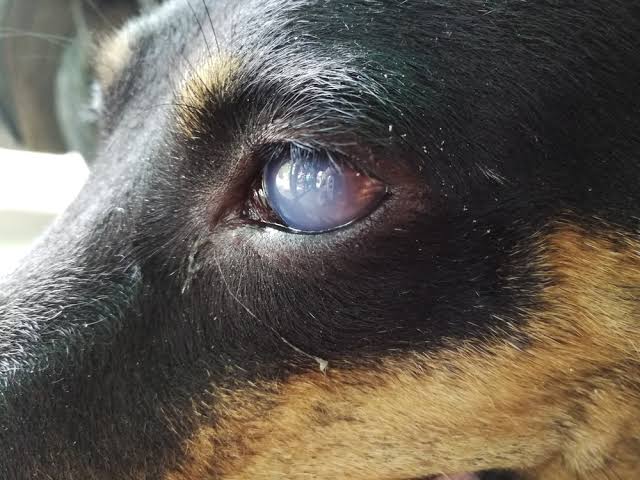
A blue-grey haze of the lens, typically visible from age 6–7+. Very common in senior dogs. Vision is slightly reduced in low light but daily function is usually normal. Not a disease — just aging of the lens protein. Dogs with nuclear sclerosis can still track toys, recognize owners, and navigate familiar spaces.
Cataracts (pathological, any age)
An opaque, white or grey lens opacity. Can occur at any age but becomes more common after 8 years. Significantly impairs vision and can lead to blindness if untreated. Requires veterinary diagnosis — cataracts and nuclear sclerosis look similar to owners but are distinguishable under ophthalmoscope.
Visible lens haze (either type) in an otherwise unknown-age dog is a strong signal of 6+ years.
3. Coat and Muzzle
Coat quality changes predictably with age:
- Young dogs (under 2 years): coat is typically soft, lustrous, and even-textured. No grey.
- Mature adults (3–6 years): coat may develop slightly coarser texture in some breeds. No grey, or very minimal grey around eyes.
- Early seniors (7–9 years): muzzle greying often begins. May be subtle — a few white hairs around lips and chin.
- Late seniors (10+ years): widespread muzzle and face greying common. Coat may become duller or coarser. Some thinning.
Note: some dogs grey early due to genetics or chronic stress/anxiety. Premature greying in a young dog is not necessarily an age indicator.
4. Muscle Mass and Body Composition
Dogs naturally lose muscle mass (sarcopenia) from around age 7, even with adequate exercise. Signs:
- Visible spine or hip bones despite normal weight — fat redistributes as muscle decreases
- Narrowing of the hindquarters, particularly behind the hips
- Loss of defined shoulder muscle
5. Mobility and Joints
Joint changes become apparent from age 6–8 in medium/large breeds. Signs in an unknown-age dog that suggest senior status:
- Stiffness after lying down — takes a few steps to 'warm up'
- Reluctance to jump or climb stairs that were previously no issue
- Reduced pace or distance during walks
- Crepitus (clicking/popping) of joints on palpation
Quick Age Estimation Guide
| Clue | Likely age |
|---|---|
| Baby teeth present | Under 6 months |
| All adult teeth, white and sharp | 1–2 years |
| Slight tartar, minor cusp wear | 3–5 years |
| Moderate tartar + wear; clear eyes; full muscle | 5–7 years |
| Lens haze; muzzle greying; beginning muscle loss | 7–10 years |
| Significant tartar; cloudy eyes; reduced muscle; joint stiffness | 10+ years |
Know your dog's age? Convert it to human years using our calculator.
Dog Age CalculatorFrequently Asked Questions
Related
PawToolkit provides general information only. Always consult a licensed veterinarian for medical advice specific to your pet.